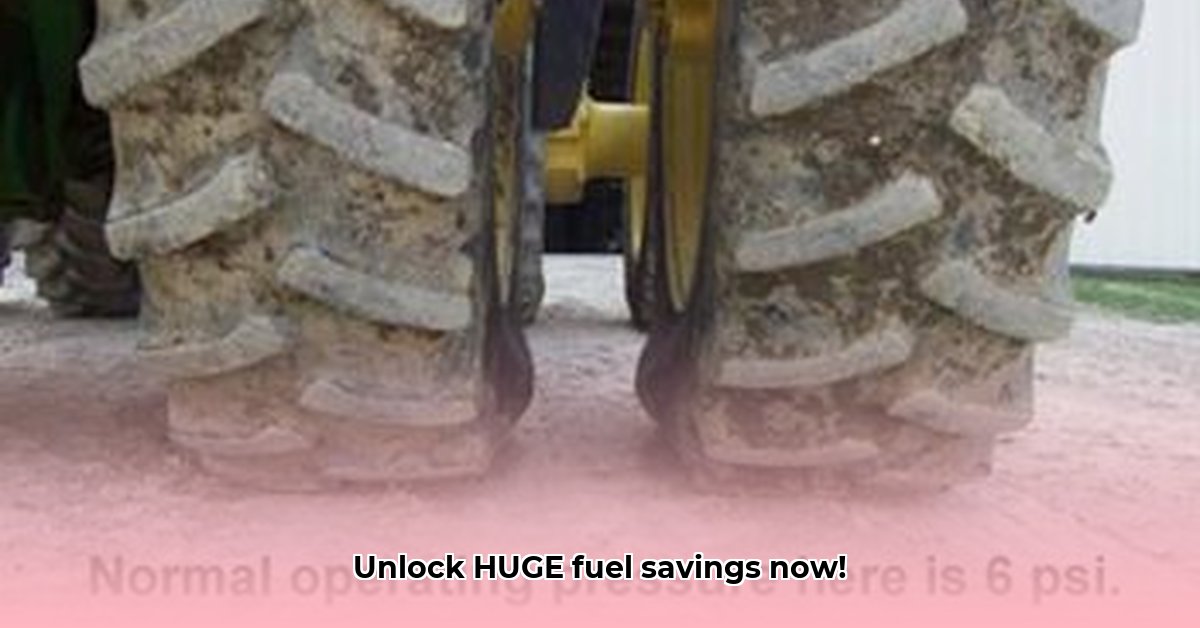
Air Pressure: The Unsung Hero of Tractor Efficiency
Let's talk tractor tires – specifically, the critical role of proper inflation. Maintaining optimal tire pressure isn't just about filling tires; it's a cornerstone of fuel efficiency, soil health, and equipment longevity. Neglecting this seemingly minor detail can lead to significant financial losses and environmental damage. This guide provides actionable steps to optimize your tire management, resulting in significant cost savings and increased operational efficiency. For more in-depth information, check out this helpful resource: Tractor Tire Guide.
Understanding the Importance of Proper Tire Inflation
Proper inflation maximizes efficiency and protects your investment. It translates to smoother operation, reduced fuel consumption, and healthier soil. Conversely, improper inflation leads to costly repairs, reduced yields, and accelerated tire wear. The difference between optimal and suboptimal inflation can significantly impact your bottom line.
Factors Affecting Optimal Tire Pressure
Several key factors influence the ideal tire pressure for your tractor:
- Load: Heavier loads necessitate higher pressure to maintain adequate support. Think of it as balancing the weight; more weight requires more support pressure.
- Speed: Higher speeds require increased pressure to ensure tire stability and prevent damage. This prevents excessive deformation and heat buildup.
- Soil Conditions: Soft, wet soil requires lower pressure to minimize compaction and prevent damage to the soil structure. Conversely, hard, dry soil can often handle higher pressure.
- Tire Type and Size: Different tires have different pressure recommendations. Always consult your owner's manual for the baseline recommendations specific to your equipment.
Measuring Tire Pressure Accurately
Accurate pressure measurement is crucial. Always measure when tires are cold (before operation), as pressure increases with heat generated during use. Use a reliable pressure gauge and check all tires. Inaccurate readings lead to incorrect adjustments and compromise the benefits of proper inflation.
A Step-by-Step Guide to Optimizing Tire Inflation
Follow these steps to ensure optimal tire pressure:
Consult Your Owner's Manual: Your owner's manual provides baseline pressure recommendations for various loads and conditions. Use these as a starting point for your adjustments.
Regular Pressure Checks: Make regular checks a part of your routine. Weekly, or even daily checks, are recommended, depending on your operation and conditions. This is a simple yet highly effective preventive measure.
Adjust According to Conditions: Regularly monitor and adjust pressure based on load, speed, and soil conditions. Adapt your pressure to the changing demands of your operation.
Consider a Central Tire Inflation System (CTIS): For advanced management, consider a CTIS. This allows for dynamic pressure adjustment to optimize for changing conditions, reducing operator workload and maximizing efficiency in diverse terrains.
Benefits of Proper Tire Inflation: A Quantifiable Impact
Proper inflation delivers substantial benefits:
Fuel Efficiency: Reduced rolling resistance translates to lower fuel consumption, leading to significant cost savings over time. Studies show that optimal inflation can reduce fuel consumption by up to 10%.
Improved Soil Health: Reduced ground pressure minimizes soil compaction, leading to healthier crops and higher yields. This positive impact extends far beyond a single growing season.
Extended Tire Life: Even tire wear significantly extends tire lifespan, reducing replacement costs and downtime. Proper inflation can prolong the life of your tires by up to 20%.
Risk Assessment Matrix: Ignoring Proper Inflation
Ignoring proper inflation carries considerable risks:
| Risk Category | Likelihood | Severity | Potential Impact |
|---|---|---|---|
| Tire Failure | Moderate | High | Costly repairs, potential accidents, lost productivity |
| Fuel Waste | High | Moderate | Increased operating costs |
| Soil Compaction | High | High | Reduced yields, long-term soil damage |
| Reduced Productivity | High | Moderate | Lower yields, wasted time and resources |
| Increased Downtime | Moderate | High | Lost productivity, costly repairs |
Calculating Optimal Tire Pressure for Varying Conditions
There's no single formula for optimal pressure. It requires a combination of resources and practical experience.
Manufacturer's Recommendations: Use your tire manufacturer's load/pressure charts as a starting point. These provide a baseline for your adjustments.
Pressure Gauge: Accurate measurements are essential. Use a reliable pressure gauge for precise readings.
Pressure Calculation Tools: Several tools (like Michelin AgroPressure 1) guide pressure based on load, soil type, and speed. These consider the complex interactions between these variables.
Monitoring and Adjustment: Regularly check and adjust pressure to match prevailing conditions. Flexibility is key to optimal performance.
Soil Type Considerations
Consider these factors when adjusting pressure based on soil type:
Clay Soils: These dense soils are vulnerable to compaction. Use lower pressures to minimize damage.
Sandy Soils: These soils are more forgiving, allowing for slightly higher pressures.
All Soil Types: Err on the side of caution. Over-inflation is generally more damaging than under-inflation.
Long-Term Strategy: Investing in CTIS
Central Tire Inflation Systems (CTIS) offer significant long-term benefits. They allow for real-time pressure adjustments, optimizing performance for differing conditions and minimizing soil compaction. This represents a significant capital investment but offers substantial returns in increased efficiency and reduced operating costs.
Risk Mitigation Strategies
| Risk Factor | Mitigation |
|---|---|
| Soil Compaction | Maintain proper inflation; utilize low-pressure techniques where necessary. |
| Premature Tire Wear | Maintain correct pressure; avoid overloading. |
| Increased Fuel Consumption | Maintain optimal pressure; adopt fuel-efficient driving practices. |
Proper tire pressure management is crucial for maximizing efficiency, minimizing costs, and promoting sustainable farming practices. By following the recommendations here, you can significantly improve your bottom line and protect your valuable investment.